

When floods hit Nairobi recently, many people were quick to blame the city’s poor drainage system. But the truth is deeper than clogged drains and heavy rain. What we are witnessing is the result of years of bad governance.
Every rainy season, parts of Nairobi turn into rivers. Roads become impassable, businesses close, cars are destroyed, and people are forced to wade through dirty water just to get home. Some are even carried across flooded streets on makeshift carts. This is not normal for a modern city. It is a sign that something is fundamentally wrong with how public resources are managed.
Kenyan taxpayers contribute a significant portion of their income to the government. In return, citizens expect functioning infrastructure, reliable services, and leadership that prioritises public welfare. Yet too often, the money meant to build and maintain such systems disappears into mismanagement, corruption, or poorly executed projects.
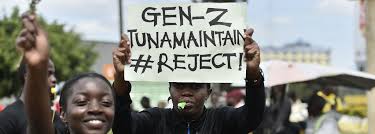
This is why the recent protests led by Generation Z should not be dismissed as youthful noise. Many older citizens have been quick to criticise young protesters, arguing that demonstrations disrupt businesses or create instability. But that view misses the bigger picture.
Young people are raising legitimate concerns about accountability and leadership. They are asking questions that many others have quietly asked for years: Where is public money going? Why do services fail despite heavy taxation? Why do elected leaders often ignore the voices of the people who voted them into office?
Consider the debates around the Finance Bill 2024. Citizens across the country expressed strong opposition to provisions that would have increased the financial burden on already struggling households. Yet many elected representatives still voted in ways that appeared to contradict the wishes of their constituents.
This raises a fundamental question about representation. Members of Parliament are elected to carry the voices of their constituencies to Parliament of Kenya. Citizens cannot all sit in Parliament, so they entrust individuals to represent their interests. When leaders ignore those interests, the democratic contract begins to break down.
Protests, therefore, are not merely acts of anger. They are part of democratic expression. They are a way for citizens to remind leaders that power ultimately belongs to the people.
The misconception that protests only affect certain groups is also misleading. Bad governance affects everyone, whether directly or indirectly. Today it may be floods destroying someone else’s car or business. Tomorrow it could be a hospital unable to treat a loved one because of systemic failures in healthcare. It could be a child sent home from school due to economic hardships that poor policies have worsened.
Governance failures do not remain confined to one group. They eventually reach everyone.
The message from young protesters is simple: Kenya deserves better. They are not protesting for chaos. They are protesting for accountability, transparency, and responsible leadership. They want public funds to be used for public good. They want infrastructure that works, institutions that serve citizens, and leaders who listen.
Instead of dismissing these voices, the country should pay attention. The frustrations expressed by young people reflect the concerns of millions of Kenyans who want a government that works.
The future of this country does not belong to one generation alone. It belongs to all of us. And if Kenya is to move forward, citizens across generations must recognise that demanding better governance is not rebellion it is responsibility.