

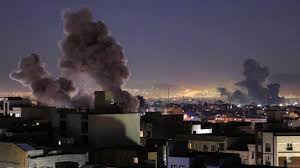
The Middle East has been thrust into a major military crisis following the outbreak of a large-scale conflict involving Iran, the United States, and its regional ally Israel, raising fears of a wider regional war and disruption to global energy supplies.
The conflict began on February 28, 2026, when the United States and Israel launched coordinated air and missile strikes against several strategic targets across Iran. The attacks targeted military bases, missile infrastructure, and key political figures in major cities including Tehran, Isfahan, and Qom.
The operation was described by Washington as a necessary move to neutralize Iran’s military capabilities and prevent the country from developing nuclear weapons.
Iran quickly retaliated by launching ballistic missiles and drones against Israeli cities and American military bases across the Middle East, including installations in Bahrain, Qatar, Kuwait, Iraq, and Saudi Arabia. The attacks triggered air-raid sirens in several countries and forced millions of civilians into shelters.
The retaliatory strikes also targeted airports, shipping ports, and military facilities across the Persian Gulf region, widening the conflict beyond Iran’s borders. In response, the United States and Israel intensified their bombardment campaign against Iranian military infrastructure.
Human rights monitors and international observers report that more than 1,000 people have been killed in Iran, including civilians, as strikes continue across the country. Thousands more have been injured, and large numbers of residents have fled the capital, Tehran, amid ongoing explosions and airstrikes.
The United States has also confirmed casualties among its forces, with several American soldiers reported killed during the conflict.
Meanwhile, naval confrontations have intensified. In one major escalation, a U.S. submarine sank an Iranian warship in the Indian Ocean, marking one of the most significant naval engagements between the two countries in decades.
The conflict has begun to disrupt global energy markets after Iran moved to restrict traffic through the Strait of Hormuz, one of the world’s most critical oil shipping routes. The blockade has stranded hundreds of ships and caused sharp fluctuations in global oil prices.
Economists warn that prolonged fighting could significantly affect global trade and economic stability, particularly if the conflict spreads to other parts of the Middle East.
The United Nations and several world governments have called for an immediate ceasefire, warning that continued escalation could trigger a broader regional war involving additional countries and armed groups. However, both Iran and the United States have signaled that military operations are likely to continue in the coming weeks.
As the war enters its first week, analysts say the situation remains highly volatile, with the possibility of further escalation that could reshape security dynamics across the Middle East and beyond.