

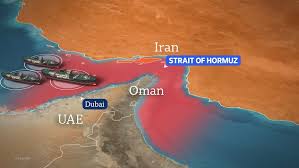
The Strait of Hormuz has long been regarded as one of the most sensitive and dangerous maritime routes in the world, particularly during times of conflict in the Middle East. This narrow waterway, which connects the Persian Gulf to the Gulf of Oman, serves as a critical gateway for global energy supplies and international trade.
Stretching between Iran to the north and Oman to the south, the strait handles an estimated 20 percent of the world’s oil shipments. Oil produced in Gulf nations such as Saudi Arabia, Iraq, Kuwait, and the United Arab Emirates must pass through this narrow corridor to reach global markets in Asia, Europe, and beyond. Because of its strategic importance, the strait becomes a focal point whenever tensions escalate in the region.
One of the main reasons the Strait of Hormuz becomes dangerous during wars is its extreme narrowness. At its narrowest point, the strait is only about 33 kilometers wide, with shipping lanes even smaller. This makes large oil tankers and commercial vessels vulnerable to military threats such as missiles, naval mines, drones, or attacks by small fast boats.
During periods of heightened conflict, naval forces from powerful countries including the United States often increase their presence in the area to protect shipping routes. However, this buildup of military assets can also increase the risk of accidental clashes, miscalculations, or direct confrontations between opposing forces.
Any disruption in the Strait of Hormuz can send shockwaves through the global economy. Because such a large portion of the world’s oil passes through the route, even temporary blockages or threats to shipping can cause sharp increases in global oil prices.
Energy analysts warn that if the strait were to be blocked completely during a major war, it could severely disrupt global energy supply chains, affecting fuel prices, transportation costs, and economic stability across many countries.
The Strait of Hormuz has been the center of military tensions for decades. During the Iran–Iraq War, the region witnessed what became known as the “Tanker War,” when oil tankers were repeatedly attacked in the Gulf. More recently, incidents involving drone attacks, ship seizures, and naval patrols have kept the strait at the center of geopolitical tensions.
Experts widely regard the Strait of Hormuz as one of the world’s most critical maritime chokepoints. Its importance to global energy supply, combined with its narrow geography and proximity to rival military forces, makes it especially vulnerable during regional conflicts.
As tensions continue to rise in the Middle East, the Strait of Hormuz remains a place where even a small incident could quickly escalate into a much larger international crisis affecting not only the countries directly involved but also economies and communities across the globe.